
ISO 20000 certification in Bangladesh helps an IT service provider demonstrate how it plans, delivers and improves the services customers depend on. Start with the actual service. Follow an incident, a service request or a customer onboarding from start to finish. Identify who makes each decision and how the provider can show that it met the agreed terms.
This guide is for managed service providers, software support teams and internal IT departments preparing for an ISO/IEC 20000-1 audit. It covers service scope, operating evidence, certification fees and comparisons with related standards. Read the broader Technotex ISO certification guide or the separate ISO 27001 audit readiness guide if your customer also asks for information security certification.
Define the services and boundaries
ISO 20000 certification in Bangladesh starts with the services your organization actually delivers. ISO/IEC 20000-1 describes requirements for a service management system, commonly called an SMS. An organization uses the system to manage services from planning and design through transition, delivery and improvement. The audit looks at how these activities work together for the services in scope. Begin with the official ISO/IEC 20000-1 overview and obtain the applicable standard for the detailed requirements.
Write the scope in language a customer can recognize. A Dhaka managed service provider could cover workplace IT support, account administration and device support for contracted businesses. A software company could cover hosting and production support for its subscription application. An internal IT team could describe the technology services it provides to employees or business units. List the responsible legal entity, relevant locations, working arrangements and teams. Ask customers for the exact wording if certification is a condition of a contract or tender.
Map one recent customer request through the proposed boundary. Follow the original contact, the person who accepted the request, the teams who worked on it and the party who confirmed completion. Include dependencies managed by other business units or service providers. For example, a support team may own customer communication while an external vendor performs on-site repairs. Write down how the two parties share the information required to manage the service, who approves exceptions and where evidence is held.
Check the boundary against normal changes. A new support location, subcontractor or customer segment can alter the activities and obligations that the organization needs to manage. Give someone responsibility for determining when these changes affect the SMS or the wording used for certification. Keep a short record of how the boundary was chosen and approved. The Technotex certification scope guide gives businesses a starting point for this discussion.
Consider what happens when a service is retired or a customer leaves. The service may still have open support requests, records to transfer or activities assigned to a third party. An owner should know when its obligations end, which records will be kept and where to find the decision that ended the arrangement. Adding that handoff to the scope walkthrough can reveal gaps that remain hidden when the team looks only at onboarding and routine delivery.
Build a service catalogue around customer expectations
Write a short catalogue entry for each service. Include the service’s purpose, eligible users, how to request it, normal coverage hours, who owns it and its major dependencies. Where the terms vary by customer, point to the applicable agreement. Keep the entry readable enough for the service desk to use when a customer asks whether a request is covered. If the answer requires interpretation each time, improve the entry or clarify the contract with the owner.
Ask the delivery and commercial teams to review the catalogue together. The commercial team can show what was promised. Support can show what it can reliably deliver and how work is measured. Look for quiet differences, such as a sales proposal that describes support seven days a week while the service desk records a separate arrangement for holidays. Confirm which version is authorized before using it to assess service results.
Document how new customer requirements are evaluated. If a customer asks to shorten recovery times or extend on-site support to another district, determine which team can assess the resources and supplier commitments involved. Record the decision, the terms approved and when they take effect. Then update the catalogue, the support instructions and any reporting arrangement that depends on the change. Check a real ticket against the updated information to confirm the handoff worked.
Create a route for routine feedback. Service review meetings, customer complaints and repeated questions from support can point to problems with the way a service is described or offered. Assign an owner to evaluate the information and record what the company chose to change. If the customer’s request will remain outside the current agreement, communicate how it can be considered later and ensure the service desk has the same information.
Review the catalogue when services change and on the schedule you set for routine maintenance. Separate obsolete entries from current offerings so staff can identify which instructions apply. Preserve an appropriate history so a later review can determine the terms in effect when an earlier request was raised. A simple approval record and effective date can be sufficient when the other supporting records are easy to locate.
Turn service level agreements into usable measures
Translate each service commitment into a clear measurement rule. For a response time, decide which record starts the clock, which event counts as a response and which coverage hours apply. For a restoration commitment, define the agreed end point and how interruptions or dependencies are handled. Capture the rule in a place where delivery, reporting and customer contacts can all find it. A small set of measures with transparent definitions is easier to defend than a dashboard with unexplained figures.
Check how priority is assigned. An issue reported by one person may affect an entire customer site, while a request from a senior executive may have limited service impact. Use an agreed priority method and make it clear who can override it. When the situation changes, record the reason and effective time for the update. Review a few real records to see whether people apply the method consistently across teams and customer accounts.
Reconcile one reporting period manually before relying on automation. Pick a sample of tickets across different priorities, working hours and outcomes. Confirm that the source timestamps, pause reasons and closure states support the reported numbers. Look at tickets reopened after closure and records transferred between queues. A reporting tool can produce a reliable number only when the underlying events correspond to the agreed measurement rule.
Discuss performance with customers at the agreed intervals. When a target is missed, explain what happened, which part of the service was affected and how the issue will be followed up. Include the decisions that require customer input, such as revised maintenance windows or a clearer escalation route. Record actions, owners and due dates. At the next review, use the newer evidence to show whether the actions changed the result.
Examine how measures behave during a peak period. A monthly average can conceal that work regularly waits longer near shift handover or when the main site is closed. Look at the distribution across relevant periods and services before drawing conclusions. If the organization relies on a particular supplier during those periods, compare the supplier’s commitment with the promise made to the customer. Resolve differences before treating the customer target as achievable.
Connect incidents, service requests and recurring problems
Use a recent service desk queue to understand the work before changing forms. An interruption, a standard request and an investigation into repeat failures involve different decisions. A customer may use the same contact channel for each, so guide the team on how to recognize and route the work. Record enough information to understand the impact, the owner and the next action. Do the same for requests handled by phone or through a supplier.
Follow an incident from first report to restoration and closure. Check how the team assessed the impact, chose the priority, assigned the work and communicated progress. Review what happened if the first person could not resolve it. Ask who confirmed the service had recovered and how affected users were informed. These are practical audit questions because the evidence usually exists across multiple people and records.
For standard requests, define what can be fulfilled through a documented pattern and what needs additional approval. A request for a replacement device might need confirmation of eligibility. An account change might need authorization from a named customer contact. Retain the approvals and the result with the request. If the same request requires repeated manual interpretation, review whether the instructions, catalogue entry or approval rules are unclear.
Use recurring incidents to decide when a problem investigation is justified. Group records that appear to share a cause, then verify that the grouping is accurate. Identify what the team can do to reduce repeated service impact while the longer investigation continues. Record how possible causes were evaluated and who authorized the eventual action. After making a change, monitor comparable incidents long enough to determine whether the frequency or impact changed.
Check closure quality by reading a sample from the customer’s perspective. A closed record should allow someone to understand what was done and whether there is follow-up work. If one queue closes the issue while another retains an open action, link the records. Review a handover across shifts to ensure the new owner can identify the current status and the person awaiting an update. This is particularly important for organizations offering extended support hours with a small team.
| Area | Example record | What to check |
|---|---|---|
| Incident | Incident timeline and customer update | Restoration and closure decisions are traceable |
| Service request | Approval and fulfillment record | The service followed the applicable authorization |
| Problem | Investigation and later performance review | The organization evaluated whether the action worked |
| Service level | Measurement definition and report sample | The calculation matches the agreement |
Manage changes and service transitions with evidence
Define how changes are proposed, assessed, approved, implemented and reviewed. Use categories that suit the work, such as routine changes with an approved pattern, changes requiring specific review and urgent changes with a documented escalation path. Identify who can act under each category and what evidence is retained. Avoid giving a routine label to work that falls outside the approved conditions merely because the team has performed similar work before.
Ask that an assessment describe the actual service impact. A platform update might affect customers using an older integration, while a device policy could affect staff working away from the office. Identify the services, customers, records and supplier arrangements involved. Give the decision-maker the proposed timing, relevant test results and a plan for responding if the expected result is not achieved. Record the decision together with the relevant conditions.
For new or changed services, agree acceptance criteria before delivery starts. Confirm that support knows how to recognize common requests, locate documentation and reach the right specialist. Check that the reporting and escalation arrangements promised to the customer are ready. Schedule a handover with the customer or service owner when appropriate and retain the evidence of acceptance. After launch, review real tickets against the plan to check whether the transition met its objectives.
Keep useful relationships among service records. A support team may need to know which customer depends on a device group, platform, vendor or application. Decide which information is necessary to assess changes and diagnose service impact, then assign an owner for updates. When a system is replaced, check that related support instructions and dependency records reflect the new state. Review a sample rather than assuming a completed change automatically updated every related record.
Choose one urgent change for a retrospective review. Did the organization escalate the decision appropriately, protect communication with the customer and capture what was done? Did it complete the expected follow-up after normal operations resumed? Where the team used an exception, check whether the reason is likely to recur. An urgent change can reveal a capacity problem, a missing approval arrangement or a dependency that the usual planning process does not address.
Manage suppliers, continuity and service capacity
List the providers whose work affects each service. Include third-party field support, hosted platforms, communications and any internal supplier that performs part of the work. Assign an owner who understands what was purchased and who can review performance. Link the provider’s responsibilities to the customer commitment they support. If the customer needs coverage on weekends, check whether the upstream agreement provides the support you intend to rely on during those hours.
Review an actual escalation to a supplier. Check how the service desk obtained the provider’s case number, how updates returned to the customer team and whether the supplier was able to meet the expected response. Record repeated problems so that the relationship owner can raise them in review meetings. A supplier performance summary should lead to a decision when the service is consistently affected, including who has authority to change the arrangement or accept any remaining limitations.
Use capacity planning to test whether the current service model can accommodate predictable changes. Examples include onboarding a customer with many workstations, adding a product with a new support channel or moving a team to coverage across time zones. Estimate the likely demand and available personnel, then identify when the assumptions need a check. The team should know what conditions trigger an escalation for additional resources or a revised schedule.
Prepare continuity arrangements around the services the organization has agreed to deliver. Decide who can declare a disruption, how the team contacts customers and suppliers, and where people can find current instructions if their usual working environment is unavailable. Run an exercise with defined objectives. Observe who makes decisions and whether the people involved have the information they need. Record the result and follow up where the recovery process or customer communication needs improvement.
Test dependencies that are easy to overlook. An alternative service desk location may be available, but access to telephony or the customer’s approved contact list may depend on a process controlled elsewhere. Include those handoffs in an exercise and identify who confirms readiness. Agreements, exercises and operating records give an auditor different views of how delivery is managed. Compare them and correct discrepancies rather than maintaining three versions of the same promise.
Prepare internal audit, management review and certification
Plan internal audits around the processes that matter to the services in scope. Identify the criteria, appoint people who can review the work objectively and sample records across teams and working hours. Ask the auditor to include an exception, such as a breached service target or an urgent change. Ordinary cases show how work should proceed. Exceptions show whether responsibilities and decisions remain clear when the normal path is unavailable.
Record findings with enough detail for an owner to reproduce the issue. State the requirement, identify the evidence reviewed and describe the difference observed. Correct the immediate case, investigate why it happened and check for similar examples. After a change, verify the result using a different sample. Technotex’s guide to internal audits covers how to organize that evidence and the review programme.
Use management review to prioritize decisions. Bring trends, customer feedback, significant service changes, outstanding findings and the performance of important dependencies to the people who can allocate resources. Record who will take each action, by when and how the result will be evaluated. Ask leadership to resolve disagreements that recur across functions. A late handoff between sales and delivery often needs a decision about ownership rather than another request for individual staff to pay closer attention.
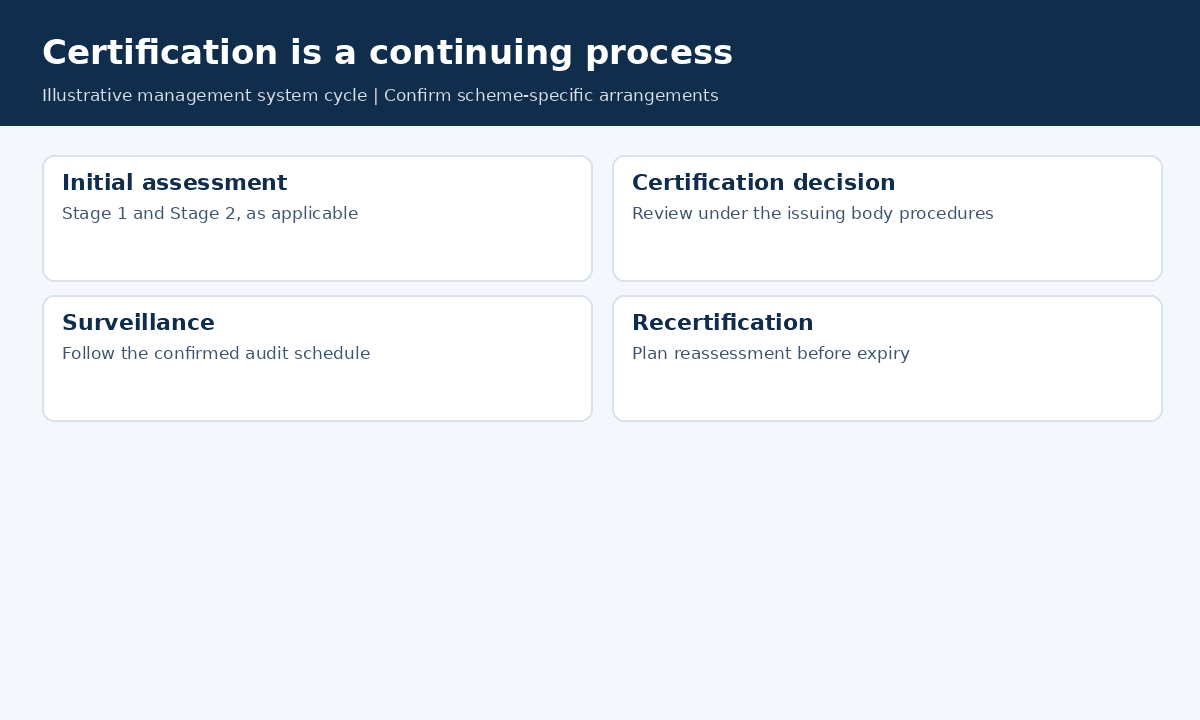
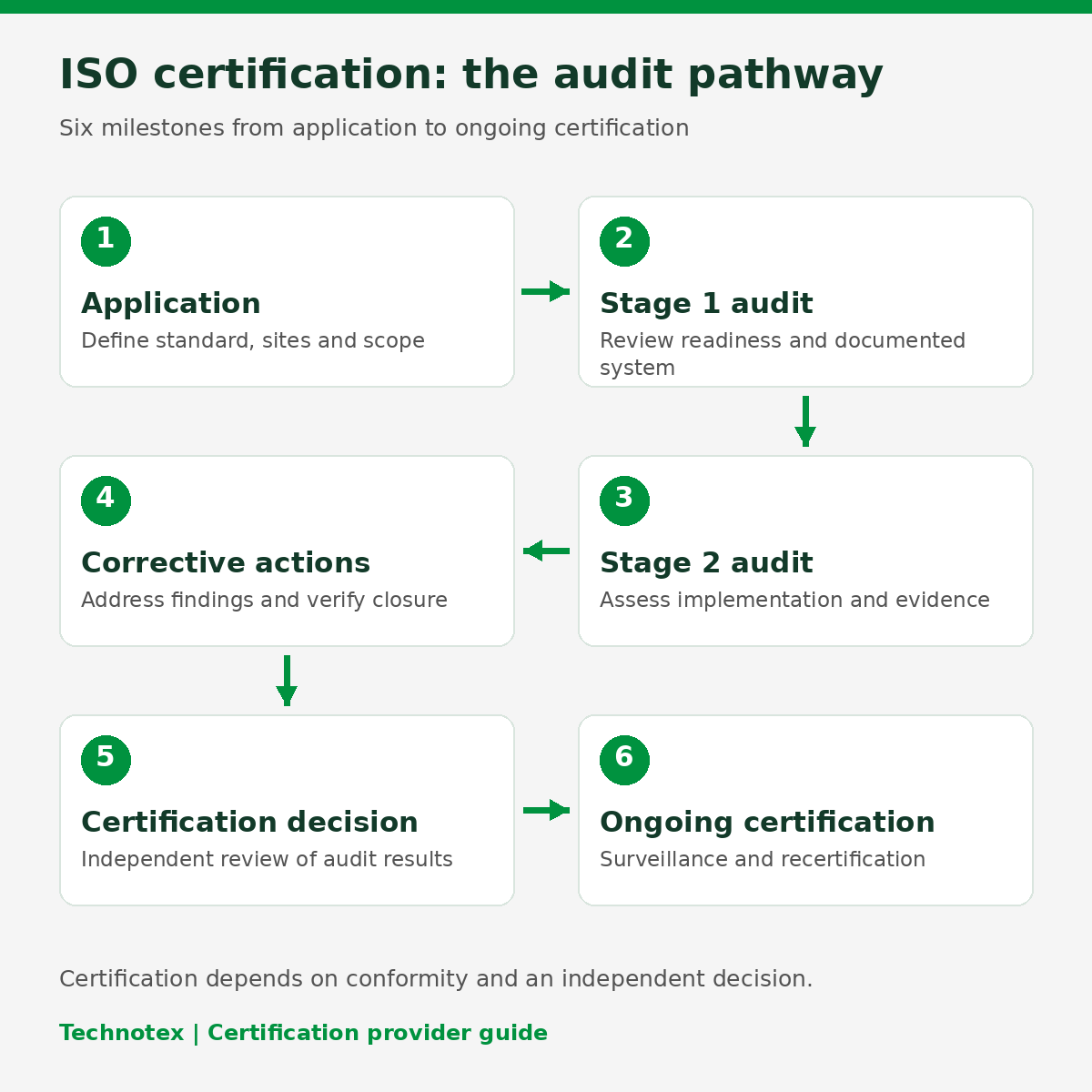
Ask the certification body how it plans the initial audit. Stage 1 generally informs readiness and audit planning. Stage 2 evaluates implementation within the audit scope. Prepare the scope, service catalogue, service level agreements and operating records. Add internal audit results, management review and improvements. Use a small evidence index to tell the auditor who can retrieve each record. Agree how to handle confidential customer files or personal information during review.
Ask each process owner to describe one recent transaction in their own words. They should be able to explain what triggered the work, where the decision was recorded and which team owned the handoff. Give them access to current operating information and identify an alternate contact for essential evidence. The Technotex guide to Stage 1 and Stage 2 provides further planning context.
Compare ISO 20000 certification costs and schedules
Use the same written scope summary for each certification body. Include the legal entity, services, locations, approximate staffing, working hours and third-party activities. Explain which teams are remote and how the organization shares operations across delivery locations. Ask the provider to list the assumptions it uses to calculate its fees. Quoted prices are more comparable when sites, service boundaries and audit arrangements are the same.
Ask for separate lines for initial audit work, travel, follow-up, surveillance and recertification. Confirm which taxes or charges are included and how later scope changes are handled. If the customer requires accredited certification, confirm how to check the issuer’s accreditation for the relevant standard and scope. Agree the expected certificate wording and verify that it addresses the services the customer actually purchases.
Budget separately for internal implementation. Common costs include staff time, training, mapping service dependencies and improving records where existing tools cannot capture decisions. Review whether planned work needs additional procurement or whether the team can use what it already has. Compare the estimated costs after the first gap review, when owners have seen which changes are actually needed. Use Technotex’s guide to ISO certification costs for further comparison points.
Work backward from the date when the customer needs evidence. Identify which changes must be implemented, which records need to accumulate during normal operations, and when internal audit and management review can take place. Confirm auditor availability and allow time to respond to any findings. Ask which documents the buyer needs at each stage and confirm deadlines in writing. Keep audit dates, acceptance of evidence and the certification decision distinct in the project plan.
Keep a short list of assumptions that could change the plan. A customer could require a wider scope, a provider could move a critical activity to another site, or management could decide to add another service. For each change, identify who updates the scope, reviews customer commitments and reconfirms any quotations. This avoids relying on a schedule that reflects an older business arrangement.
| Item | What to request |
|---|---|
| Initial audit | Stages, sites and service scope included |
| Travel and other fees | Included and separately billed expenses |
| Follow-up | Rates for additional review or visits |
| Certification cycle | Surveillance and recertification terms |
Worked example for a Dhaka managed service provider
Consider a hypothetical provider that supports workplace technology for several organizations. It operates a central service desk and contracts a field support team for selected locations. One customer asks for certification covering the support described in its agreement. The provider compares that agreement with its initial scope and finds that the draft covers the service desk but barely describes field support or device replacement. The team clarifies how both activities contribute to the service.
The first service level review follows four sample incidents. One ticket recorded as a prompt response shows that an internal acknowledgement stopped the clock, although the customer agreement measures the first meaningful reply. Reporting and delivery agree which timestamp should be used and check a previous reporting period for similar errors. The next review explains the corrected result, which records changed and how the revised measure works.
During a service transition, the provider adds a new customer location. Field support was informed, but the service desk received no instruction for confirming whether call-outs were authorized there. The transition owner updates the acceptance checklist to include a test request from the new location. The owner then repeats the handoff with another site and confirms that the desk, field supplier and customer contact can follow the same instructions.
An internal auditor samples the revised reports, checks the new site handoff and reviews an unrelated service to see whether the same problems occur elsewhere. The audit identifies one further issue where an exception remained assigned to an employee who had changed roles. Management records a decision to assign actions to service owners with named deputies. A later review verifies that new actions remain visible when the primary owner is away.
Once the system is operating, the company maintains a schedule for service reviews, supplier checks, internal audits and leadership decisions. The service owner reviews changes to customer commitments and informs the certification body of changes that could affect the audit programme. The organization brings the same records to its customer reviews and its surveillance visits, saving time and keeping performance discussions grounded in actual work.
Frequently asked questions
What is ISO 20000 certification in Bangladesh?
Businesses commonly use this phrase for independent certification of a service management system against ISO/IEC 20000-1. It applies to the services and organization covered by the certificate scope. An audit examines how the organization manages those services, including the decisions and operating records that show how service requirements are met.
What are the ISO 20000 certification requirements?
Use the applicable edition of ISO/IEC 20000-1 to identify the requirements. Typical readiness evidence includes a defined scope, service catalogue, agreements, delivery records, change and supplier decisions, service performance, internal audits, management review and improvement actions. The organization should be able to explain how these pieces support the actual services in scope.
How much does ISO 20000 certification cost in Bangladesh?
Request an itemized quotation based on the actual services, people, locations and dependencies. Compare initial audit fees, travel, follow-up, surveillance and recertification. Estimate your internal implementation work separately. If one fee is substantially lower, check whether the proposed scope, number of locations and audit activities match the other quotations.
How long does ISO 20000 certification take?
The schedule depends on readiness, service complexity, availability of audit time and follow-up on findings. Allow time to gather operating records, complete internal audit and management review and respond to requests for evidence. Confirm the timing of the certification decision separately from the dates of the external audit.
Can a small IT support provider apply?
A small provider can define an SMS around its services and pursue certification. Make each service owner and supplier dependency clear. The evidence can come from tools the team already uses if those records capture the decisions reliably. Ask the certification body about the audit arrangements for the proposed scope.
Is ISO 20000 the same as ISO 27001?
ISO/IEC 20000-1 covers service management system requirements. ISO/IEC 27001 covers information security management system requirements. Some activities may support both, such as change approvals and supplier reviews. Verify which standard and scope your customer requests. See Technotex’s ISO 27001 guide for information security audit preparation.
Does an ITIL qualification give the company ISO 20000 certification?
An individual qualification and certification of an organizational management system address different things. Practices from ITIL may help the team organize work. To pursue certification, the organization still needs to demonstrate that its management system meets the applicable requirements in its defined service scope.
What should a customer check on an ISO 20000 certificate?
Check the issuing body, legal entity, edition, scope, relevant locations and current status. Compare the services stated on the certificate with those you are buying. Use the issuer’s verification process and check applicable accreditation where required. Ask for clarification if a subcontracted activity or delivery site is essential to the contract.
Discuss your IT service certification scope
When you contact Technotex, share your service catalogue, sites, hours of operation, key suppliers and any conditions in the customer’s procurement documents. Ask about current audit availability, applicable accreditation scope and what is covered by the quotation.