
Understanding ISO 14064-1: Measuring and Reporting Greenhouse Gas Emissions
ISO 14064-1:2018 is an international standard that helps organizations measure, manage, and report their greenhouse gas (GHG) emissions and removals. It establishes clear principles for developing a transparent, credible, and verifiable GHG inventory.
This standard is part of the broader ISO 14064 series focused on greenhouse gas quantification and verification:
- ISO 14064-1: Organizational GHG inventories
- ISO 14064-2: Project-level emission reductions
- ISO 14064-3: Validation and verification
Why ISO 14064-1 Matters
Implementing ISO 14064-1 enables organizations to manage climate risks more effectively and demonstrate environmental accountability. The standard offers numerous benefits:
- Builds trust and credibility with stakeholders and customers
- Supports regulatory and voluntary reporting on GHG emissions
- Identifies emission hotspots and cost-saving opportunities
- Enhances supply chain competitiveness through transparency
- Advances sustainability and climate goals across operations
Key Requirements of ISO 14064-1
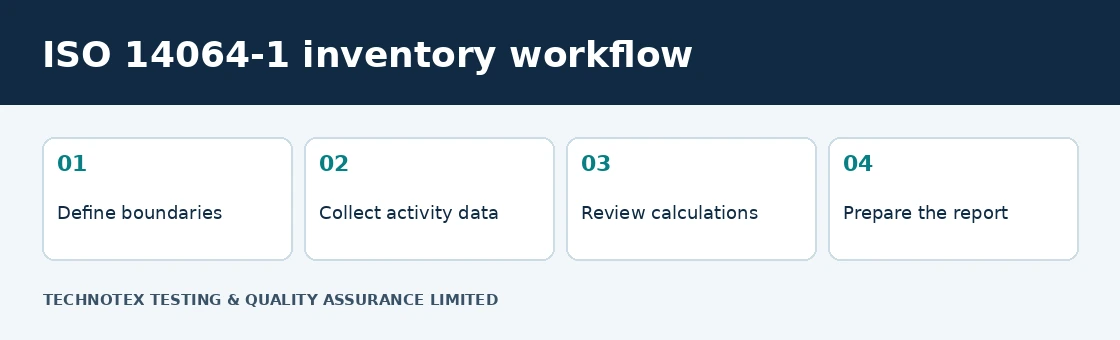
Organizations seeking conformance with ISO 14064-1 must develop and maintain a comprehensive GHG inventory that includes the following steps:
- Define organizational boundaries (e.g., operational or equity share approach)
- Identify GHG sources and sinks across all relevant activities
- Quantify emissions using recognized methodologies such as IPCC guidelines
- Establish a baseline year for tracking future emission reductions
- Prepare a verifiable GHG inventory report consistent with ISO and GHG Protocol requirements
Who Should Use ISO 14064-1?
The standard applies to organizations of all sizes and sectors that wish to quantify and report their GHG emissions in a consistent and credible manner, including:
- Manufacturing and industrial facilities
- Apparel, textile, and footwear companies
- Energy producers and utilities
- Service organizations, logistics providers, and public institutions
Related and Supporting Standards
- ISO 14001 – Environmental Management Systems
- ISO 14067 – Product Carbon Footprint
- ISO 50001 – Energy Management Systems
- GHG Protocol – Global greenhouse gas accounting guidelines (aligned with ISO 14064)
ISO 14064-1 Greenhouse Gas Inventory: Practical Evidence Checklist
A useful ISO 14064-1 inventory starts with clearly defined organizational and reporting boundaries. Identify facilities, operations, reporting periods, relevant emission sources and significant indirect emissions. Record which sources are included, any exclusions, the reasons for those choices and who approved the methodology. The correct approach depends on the organization and its reporting objectives.
For each important source, retain activity data such as fuel use, electricity purchases, refrigerant top-ups or transport records as appropriate. Document emission factors, data sources, calculation assumptions, uncertainty considerations and quality checks. Assign an owner to each dataset and maintain a version-controlled calculation workbook so an independent reviewer can reproduce the reported totals.
Before external reporting or verification, reconcile unusual year-on-year changes, examine data gaps and explain any recalculations to the base year. A documented review by management should verify that the inventory is complete for its stated boundary and purpose. ISO 14064-1 covers quantification and reporting; independent validation or verification follows applicable assurance arrangements rather than happening automatically when a company prepares an inventory.
For related management systems, see our ISO 14001 guide for Bangladesh. Consult the official ISO 14064-1:2018 standard overview when checking the current edition and requirements.
Build and review a greenhouse gas inventory workbook
Start with a register of facilities and activities in the reporting boundary. Use the same facility identifiers across finance, operations and the workbook. If departments use different codes for one site, cross-reference them before combining records. Make sure each dataset has an owner who can explain what the original record measures and how corrections are communicated.
For example, a factory may have electricity invoices for several meters, diesel purchase records for a generator and service records for refrigeration equipment. Record the meter identifiers and confirm which locations they serve. If a meter covers a shared facility, explain how the activity was allocated and retain the underlying calculation. Keep fuel and purchased electricity on separate lines so a reviewer can trace each figure to its source.
Build a period reconciliation for the activity data. Where an invoice covers dates on both sides of the reporting year, document how the activity was assigned to the correct period. If a facility opened or closed during the year, record when the change entered the inventory and which evidence supports the date. Flag missing months for follow-up before reporting a total.
Where refrigerant records are relevant, identify which service documents record the type and quantities associated with maintenance. If the records are incomplete, document the data gap and any estimate used to address it. Retain the assumptions and assign a person to improve the data collection process for the next reporting period.
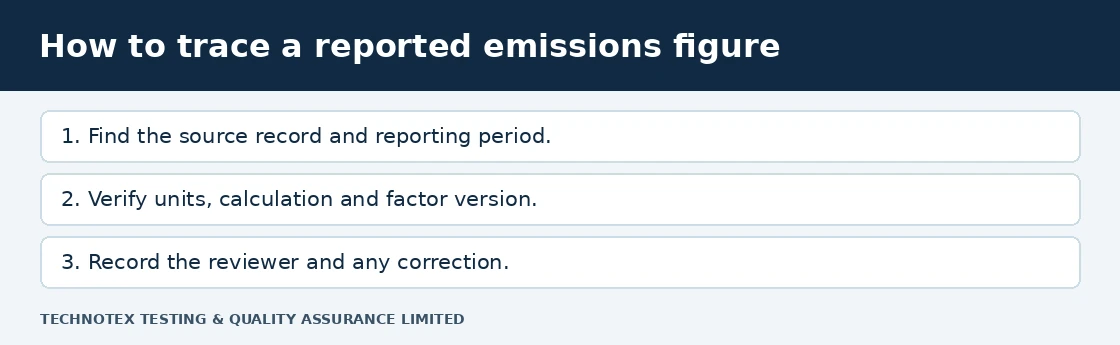
Give a second reviewer the activity records, calculation workbook and draft inventory report. Ask them to trace a reported figure back to the original record, confirm that units are consistent and verify that formulas use the intended activity and emissions factors. Record the sources and versions of factors so the calculation can be repeated. Keep corrections in a version history rather than replacing a workbook with no record of the change.
When comparing the result with an earlier period, separate changes in operations from changes in the way the inventory was prepared. Production volumes, operating hours and equipment changes may help explain a difference in activity. A change in a factor or an updated calculation method needs a different explanation. Share the reason for significant movements with the person reviewing the report.
Before release, check that the report describes the same boundary, reporting period and sources as the workbook. Identify who approves the report, who stores the supporting evidence and who can answer questions about calculations. If a customer asks for verification, confirm the reporting scope and the assurance arrangement before commissioning the work.
Set a few review dates before the next reporting deadline. A quarterly check against the source register can reveal missing meter readings or changes in the facilities covered while the relevant staff and records are still available. Review the register again if a site changes operations or adds equipment.
Set up the source register
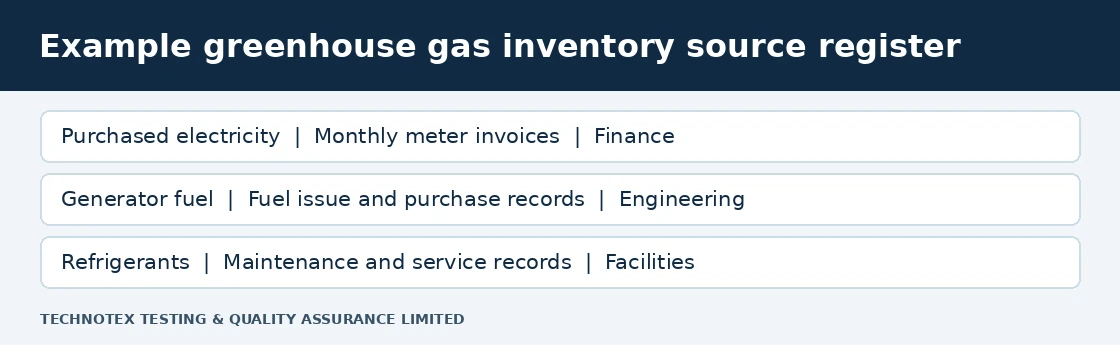
Use a separate worksheet for the source register so the scope of the inventory can be reviewed independently of the calculation formulas. A practical register lists the facility, source, reporting category, original record, unit of measure, frequency, person responsible and any limitation. Give each source a stable identifier. The same identifier should appear in the activity worksheet and, where practical, on the folder or file containing the supporting evidence.
For an apparel business with more than one site, distinguish a facility from a meter or piece of equipment. A single building can have multiple meters, while one meter can serve multiple activities. Document the relationship once and reference it throughout the workbook. If a supplier provides data for an activity outside the direct control of the business, record who provided it and what the reported quantity includes.
Keep the source register separate from the decision about which indirect emissions are significant for the stated reporting purpose. A register can include items under review without silently adding them to the reported total. Record any exclusion, who approved it and the reason. If a customer asks for additional coverage, the team can see which sources would require new data collection.
Illustrative inventory entry. Facility A buys electricity for a production hall and an office. The hall and office have separate meter identifiers, but a utility summary also gives a combined monthly total. Retain the original bills for both meters and use the combined figure as a cross-check. Avoid importing all three figures as separate consumption lines. Ask finance to flag replacement invoices so a corrected bill is used once.
If the register identifies fuel purchased in bulk, decide which records represent consumption for the period. Invoices may describe deliveries while stock logs record withdrawals or opening and closing balances. Compare the records, explain the method used, and ask the source owner about any material difference. Keep the explanation with the calculation rather than relying on an undocumented assumption.
Trace activity data through the calculation
Use one activity row per source and period at the level of detail needed for your review. Retain the original quantity and unit alongside the quantity used in the calculation. For example, if an invoice gives 24,000 kilowatt-hours and the chosen factor uses megawatt-hours, the activity entered into that calculation is 24 megawatt-hours. Label the factor units explicitly before multiplying. This example illustrates unit conversion and does not supply an emissions factor.
Keep a separate factors sheet with the source, version or publication year, geography where relevant, units and the calculation rows that use it. If the activity data and factor use different units, make the conversion visible. Record who selected the factor and why it fits the intended inventory. A reviewer should be able to tell whether the calculation changed because activity changed or because a new factor was adopted.
Build a few checks into the workbook. Flag blank source identifiers, missing months, duplicate periods and values using unexpected units. Compare the total by source against the source data before looking at the combined emissions result. When importing a new workbook or file, compare row counts and sample a few rows against the original. Keep exceptions visible until they are either corrected or explained.
Sampling can start with three deliberately different records. Pick a normal month, a month with unusual consumption, and a record where you know a correction occurred. Trace each from the reported figure to the calculation row and then to the original evidence. Ask another team member to repeat the check without relying on the person who built the workbook. If they cannot follow the trail, clarify the record or formula before sign-off.
Where a missing activity record must be estimated, label the row as estimated and document what was used in its place. For instance, if a meter reading is missing during a factory shutdown, a typical production month may give a misleading result. Ask the site team for supporting evidence about operating days or alternative records. State the basis of the estimate and how it affects the intended use of the inventory.
Explain changes and preserve the approval trail
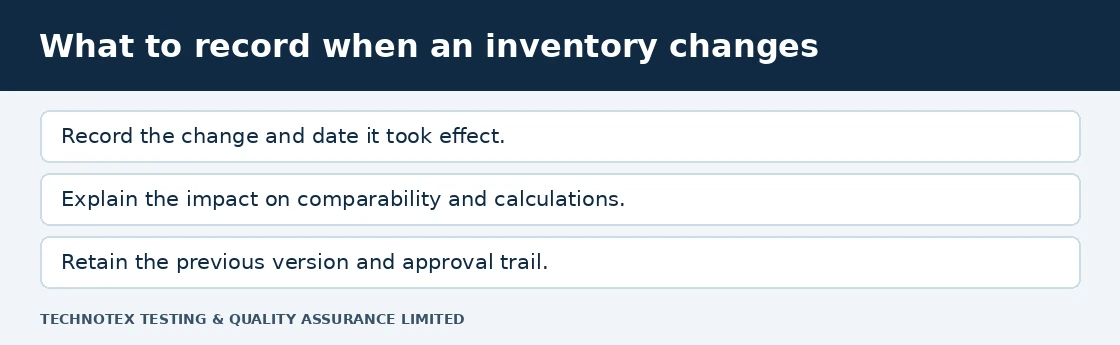
Create a short change log for the reporting period. It can include facility additions, revised source records, calculation changes and updated factors. For each entry, record the date, affected sources, reason, reviewer and impact on the reported results. If the impact cannot be determined from the available data, state the limitation and record what would be needed to resolve it.
Consider an organization that acquired another production site midway through the reporting year. The team should document when the change took effect, how it applied the inventory boundary and what records cover the period after the change. A comparison with the previous year should explain the effect of the acquisition where it matters to interpretation. If historical figures are recalculated, retain the original and revised versions.
Distinguish a correction from an operational change. A corrected invoice can change the reported total without any change in actual operations. A new production line can increase activity even when the calculation method is consistent. Where both happen in the same year, describe them separately. This gives managers and external readers a clearer basis for comparing the periods.
Prepare an evidence index before a verification discussion. The index can include the boundary statement, source register, activity records, factor references, workbook, change log, draft report and approval record. Note the owner and location of each item. If any records contain confidential commercial information, agree on the appropriate way to provide the evidence to the intended reviewer.
Build a short handover note for the person preparing the next inventory. Explain where new data goes, which worksheets contain formulas, what checks should be repeated, who approves the final report and how to correct a released figure. Include unresolved issues and the owners assigned to them. This turns a completed inventory into a repeatable process.
Check the report against its intended use
Start the final review with the intended audience and the decision the report is meant to support. A management team may use it to prioritize data improvements, while a customer may request a particular period, boundary or set of disclosures. Record the agreed reporting scope and read the report as the recipient will see it. Ask whether a reader can tell what the totals cover, where estimates were used and what evidence is available.
Check that headings and table labels distinguish facilities, reporting periods and units. If a total is reported separately from a comparison, state the basis for each. When presenting figures drawn from a workbook, carry through the definitions used in that workbook. Avoid introducing a different facility name or reporting category on the final page without a clear mapping.
Where there is a material uncertainty or an unresolved gap, describe it in plain language. State the affected activity, the reason for the limitation, and what action is planned. The evidence file should contain the supporting details so the report can remain readable. If a customer expects a particular assurance arrangement, agree what documentation is needed before the report is circulated.
End the review by checking that the file marked as final matches the approved figures. Record the version, date, approver and distribution location. Store the associated workbook and evidence index with the same version reference. If a later correction is required, update the change log and make the current approved version easy to identify.
Assign responsibilities for the next reporting cycle
Make responsibilities explicit before the next inventory begins. The inventory lead keeps the reporting schedule and source register current. Facility owners confirm changes in operations and check that activity data covers the right sites and periods. Finance or another records owner supplies the original documents. A reviewer checks the calculation and the report, and the approver authorizes the version that can be circulated.
For a small company, one person may prepare several parts of the inventory. In that case, assign a colleague to trace a sample and check important assumptions. Give the colleague the source record, the calculation row and the reported total. Ask them to record what they checked and any follow-up. If a supplier controls a key dataset, agree on the format and timing in advance and identify a contact who can resolve discrepancies.
After release, hold a short review with the people who supplied the evidence. Ask which records arrived late, where reporting units were ambiguous, and which checks found repeated problems. Choose a small number of changes for the next cycle, such as a common meter identifier or a consistent sign-off date. Record the owners and dates alongside the inventory handover notes. When the next reporting period starts, update the source register before requesting new activity data.
Conclusion
ISO 14064-1 provides the foundation for credible, consistent, and verifiable carbon accounting at the organizational level. By adopting this standard, businesses can better understand their climate impacts, manage emissions, and build long-term stakeholder confidence.
As global sustainability expectations continue to rise, ISO 14064-1 serves as a vital tool for companies seeking to demonstrate environmental responsibility and leadership in climate action.
Need professional guidance?
Contact Technotex Testing & Quality Assurance Limited to learn how we can assist your organization in developing a compliant GHG inventory and achieving ISO 14064-1 verification.